About (Edit profile)

This author has not yet filled in any details.
So far has created 1829 blog entries.

Redefining the IT war room with end-to-end observability Joe Byrne on February 2, 2024 at 4:00 pm

Transforming the war room starts with Customer Digital Experience Monitoring (CDEM) to break down silos with correlated, cross-domain insights and efficiency for rapid resolutions. 

Time is money and … Read more on Cisco Blogs

​[[{"value":"

Transforming the war room starts with Customer Digital Experience Monitoring (CDEM) to break down silos with correlated, cross-domain insights and efficiency for rapid resolutions. 

Time is money and commandeering a lot of time from many of the smartest and most expensive people across your organization, often at short notice, can be unthinkably expensive.

There’s the hourly cost of their time. Plus, the cost of lost opportunities related to the work they’re doing, which is now delayed. That’s far from the full story though. The costs extend far beyond their own input as everybody needs time to speak, listen, consider, and work through the possibilities.

And yet, when a new software release rolls around, that’s exactly how many organizations respond. They can’t be sure what might go wrong with a software release, so they make sure all the right people are available, just in case.

When it’s obvious that something is going wrong in the application runtime environment, or a mission-critical application starts to experience performance problems, and it needs to be fixed immediately, that same wide group is gathered to figure out the problem and determine the best way to fix it.

Meanwhile, reputational damage to the company is growing with every minute of disruption, and the financial clock is ticking with each minute spent identifying and remediating issues while customers and end users have limited or no access to the applications that make modern business work.

The war room is a blunt instrument that casts a wide net 

Convening an IT war room is born of a lack of visibility. The team must leverage their collective expertise to determine the likely root cause of a performance-impacting issue, because it’s typically not obvious to anyone at the outset exactly where the problem lies.

The time required to pinpoint the issue can be significant, even when the war room is filled with skilled, intelligent subject matter experts. That’s because modern applications are built on cloud-native architectures and can be accessed from anywhere using different devices. They leverage packaged code and dependencies deployed as microservices to increase developer speed and flexibility.

That includes containers, third-party libraries, and application programming interfaces (APIs) which create a complicated environment in which updates, changes, and conflicts between dependencies need to be constantly managed to ensure applications run optimally. If the application slows down, doesn’t work as it should, or crashes, the result is poor user experience and even lost business.

Application dependencies can also affect the security of an application. This is particularly true when an application depends on third-party code or libraries which could contain vulnerabilities which offer an attack path. That puts not only the application, but also user data, at risk.

For example, misconfiguration and even ransomware or distributed denial-of-service (DDoS) attacks can all present confusingly similar symptoms as network packet loss in terms of performance degradation, with no clear indication of the root cause.

Consider the scenario of a large supermarket at the height of holiday season shopping. Products are flying off the shelves and need frequent restocking throughout the day. It’s critical to know inventory availability right up to the minute, so shelves remain full. Inaccurate inventory or running out of stock undermines trust the business has worked hard to build, not to mention lost sales.

At that point, the hand scanners used for inventory start to falter. They’re not reliably scanning, which means the movement of products from the stock room onto the shelves isn’t being recorded accurately. The team can no longer be sure what’s on the shelves, what’s left in the stockroom, what needs to be reordered and when it needs to arrive.

A call is made to the IT team and a war room is convened to investigate what’s causing the problem. The Wi-Fi network is an obvious culprit, however as time passes, the networking team can’t find any Wi-Fi problems. Eventually, they realize it’s the scanner firmware. The scanners themselves need to be replaced, and once they are, normal service is resumed.

Customer Digital Experience Monitoring (CDEM) changes everything  

This story is one of many that illustrate the shortcomings of infrastructure monitoring which lacks visibility into the digital experience.

In this example, the war room participants must sequentially sort through all the different scanner dependencies according to their collective experience to spot the most likely culprit, in the least amount of time. The effort involves cross-functional teams, who each investigate their area of responsibility, so there’s a similar level of effort and time required from everyone. The result is that most teams can typically prove their “innocence” — that is, they can show that their area of responsibility does or does not harbor the root cause.

In effect, because they lack clear insight, each team spends a huge amount of expensive time looking for an issue that isn’t theirs to find. There’s a better way. Cisco Full-Stack Observability allows operational teams to completely change their troubleshooting perspective.

Customer Digital Experience Monitoring (CDEM), a capability of Cisco Full-Stack Observability (FSO) solutions, allows teams to track the user journey itself starting with the device and traversing every touchpoint including dependencies like APIs and microservices.

Had they used CDEM, the teams in our example would have seen the user journey failing at the first step. Eliminating their theoretical most likely culprit – the Wi-Fi network – would have taken just moments instead of hours, and attention would have immediately focused on the scanners themselves.

It’s easy to see how observability at this level fundamentally changes the IT war room, and dramatically accelerates mean time to resolution (MTTR) through bypassing many of the steps that teams would otherwise have to take.

Answers lie in observable telemetry data 

War rooms are complicated by multiple different data sets surfaced by separate monitoring tools. For example, Network Ops looks at data from the network, DevSecOps looks at data from the application and third-party dependencies.

Achieving a complete view of all relevant application data from normal business operations is a massive task. Worse yet, it’s impossible to correlate these endless streams of incoming data within a workable timeframe using disparate tools and systems that were never designed for the job. That makes spotting anomalies across the full stack, let alone prioritizing and acting on them, virtually impossible in a reasonable timeframe.

Cisco Full-Stack Observability solutions democratize data access, breaking down cross-functional silos and bringing teams together to collaborate on the next best step for resolving problems. Customer Digital Experience Monitoring combines Cisco’s application observability capabilities with industry-leading network intelligence, allowing IT teams to quickly identify the root cause of issues before they hurt the overall performance of the application, affect the end user and ultimately the business.

Cisco’s solution provides insights into both the application and the network, with internet connectivity metrics for application operations and real-time application dependency mapping for network operations. This combined application and network view significantly reduces MTTR with actionable recommendations that help teams prioritize remediation activities based on business impact and criticality.

For instance, teams can see at which point along the user’s path performance degradation is occurring, or communication is failing altogether. Vitally, they have contextual visibility that helps them collaboratively identify, triage, and resolve issues because they’re all working from the same data sourced from every possible touchpoint, including the network, which is an area often missing from other solutions.

The result is the end of war rooms as we know them. Instead, teams have end-to-end visibility, correlated insights, and recommended actions all tied to business context, across applications, security, the network, and the internet. Only Cisco combines the vantage points of applications, networking, and security at scale to power true observability over the entire IT estate.

Share

"}]]  Without the right tools, the IT War Room can't solve application issues rapidly and efficiently. Customer Digital Experience Monitoring (CDEM) changes everything.  Read More Cisco Blogs 

By |2024-02-03T02:51:01+00:00February 3, 2024|Cisco: Learning|0 Comments

Cisco User Protection Suite Provides MSSPs a Comprehensive and Compelling Package Nathaniel Hang on February 2, 2024 at 5:00 pm

In August 2023, I authored a blog on Cisco Secure Access, where I discussed the advantages of utilizing a comprehensive, single vendor, Security Service Edge (SSE) packages for both customers and… Read more on Cisco Blogs

​[[{"value":"

In August 2023, I authored a blog on Cisco Secure Access, where I discussed the advantages of utilizing a comprehensive, single vendor, Security Service Edge (SSE) packages for both customers and Managed Security Services Providers (MSSPs). Since then, Cisco has launched three security-focused suites that address key customer use cases for the user, for the cloud, and for breach protection. In this blog, we’ll explore the Cisco User Protection Suite, specifically, to understand what it enables for the customer, and why it makes business sense for MSSPs to offer a packaged solution around it.

Managed cybersecurity is like prime real estate for the channel

According to the 2023 Cisco Cybersecurity Index Report, organizations are struggling to effectively secure their workforces against a constantly increasing number of threat vectors. In fact, nearly 85% of customers are not adequately prepared to handle cybersecurity threats since they lack the specialization and the skills to manage increasingly complex IT environments. With industry wide technical skills shortages, cost pressures, and IT complexity on the rise, the demand and shift towards managed IT services offerings is expected to continue rising. This is especially true when it comes to managed cybersecurity offerings.

According to a recently published Canalys white paper, overall IT managed services revenue was expected to grow ~12.7% and product spending on cybersecurity was predicted to grow ~11.1% in 2023. In contrast, total IT spending was expected to grow at a lower ~3.5% globally. With 86% of businesses planning to increase their cybersecurity budgets by more than 10% in the next 12 months, MSSPs with managed cybersecurity capabilities/practices are perfectly positioned to reap the rewards of these industry trends.

Customers are looking to MSSPs for guidance and value

With approximately 75% of organizations pursuing security vendor consolidation efforts, it is apparent that customers are looking for simpler, more integrated architectures for their cybersecurity solutions. Cisco Security Suites are a great way to meet those objectives, and are designed to be easy to buy, easy to consume, and easy to use. This ultimately leads to better efficacy, better experiences, and better economics by delivering a security platform that defends against all user attack vectors. Cisco’s approach and platform enables customers with seamless access to business applications with centralized monitoring and policy management, while delivering on desired business outcomes.

The Cisco advantage

The Cisco User Protection Suite offers pervasive end-to-end security for users, endpoints, email, web, and more. It’s a compelling solution that minimizes the attack surface, addresses all attack vectors, and reduces the complexity and risks associated with IT/network access. Quick and easy to deploy, the User Protection Suite also provides all the fundamental components to protect the user, while providing core contents and capabilities for easy and tight integration into an Extended Detection and Response (XDR) solution. This enables teams to leverage unmatched security intelligence provided by Cisco Talos Intelligence Group—the world’s largest commercial security/threat research entity—along with enabling support for achieving enhanced Service Levels (e.g. higher SLAs) by utilizing the highly differentiating Digital Experience Monitoring capabilities provided by ThousandEyes.

The Cisco User Protection Suite combines an already compelling SSE solution with Multi-Factor Authentication (MFA), enhanced threat protection for email services, and the capability to secure user endpoints such as desktops/laptops, workstations, and/or servers, all in a comprehensive pre-packaged solution. This suite allows you to address all potential threat vectors related to the “user” at a very attractive price point.

The Cisco User Protection Suite equips customers and partners to:

Empower the end-user by facilitating secure, seamless access to applications, email, and data from any device, anywhere.
Reduce risk by safeguarding against all threat vectors targeting the end-user (e.g. credentials, applications, network, and related endpoints).

Cisco User Protection Suite starts with Cisco Secure Access

A comprehensive next-generation SSE platform, Cisco Secure Access supports key network use cases and provides extensive security functions through a unified management dashboard designed with simplicity, efficiency, and efficacy in mind. Secure Access provides best-of-breed security capabilities including:

Cloud Access Security Broker (CASB) – provides cloud app discovery, application risk scoring, blocking, cloud malware detection, and tenant controls.
Secure Web Gateway (SWG) – provides URL filtering, content inspection, and advanced application controls.
Firewall-as-a-Service (FWaaS) – provides Layer 3/4/7 firewall functionality with IPS using Snort 3 technology.
Remote Access – provides VPN and/or client based Zero Trust Network Access (ZTNA) for managed endpoints, or clientless ZTNA access for unmanaged endpoints with optional device posture verification (e.g., geolocation, browser type, and/or Operating System type/versions).
Data Loss Prevention (DLP) – provides the ability to define and quarantine files that violate DLP rules, both signature based and exact data match, preventing leakage of sensitive information.

SSE plus Cisco Duo for a complete authentication solution

The Cisco User Protection Suite also includes the full capabilities of Cisco Duo, an industry-leading, access management MFA solution that supports password-less options, SSO, and risk-based assessment. Cisco Duo facilitates seamless integration with various Identity Providers (IdPs) and provides posture management with sophisticated methods for user protection. Furthermore, it enables system/health verification to confirm the integrity of user devices.

Complete email protection with advanced threat detection with Cisco Email Threat Defense

Did you know that about 91% of malicious attacks begin with email? It continues to be the #1 threat vector and remains the easiest way to breach an organization when it comes to malware, ransomware, phishing, spoofing, stolen credentials, and the like. To secure this commonly used attack vector, the User Protection Suite includes extensive security-related enhancements for the email service—a business-critical application—by augmenting the Microsoft 365 email service with Cisco Email Threat Defense. Cisco Email Threat Defense bolsters threat detection and defense capabilities, and provides real-time behavior analytics, file reputation scoring, and sandboxing. This protects the user by stopping malicious emails often before they even reach the user’s Inbox, effectively stopping a typical threat sequence at the beginning of the chain of events.

Effective and resilient Endpoint Protection against threats

Given that roughly 70% of breaches involve endpoints, the inclusion of Cisco Secure Endpoint in the User Protection Suite helps prevent breaches by blocking malware at the point of entry. This allows for rapid detection, containment, and remediation of a broad spectrum of threats at the endpoint. Cisco Secure Endpoint automatically blocks file-less and file-based malware, continuously monitors file activity, and enables the user to quickly contain malicious attacks by isolating the infected endpoint(s) and accelerating remediation efforts.

How do MSSPs benefit by providing the User Protection Suite as a Managed Service offering?

By providing it in a consolidated user-centric package, the suite allows MSSPs to easily:

Offer full SSE capability, enabling the user to have secure, frictionless access to all applications with an impressive set of policy controls.
Add support for SSO functionality via integration with all common Identity Providers (IdPs) such as Microsoft Azure/Active Directory, Okta, as well as various other SAML 2.0 service providers, while providing MFA capability with support for numerous cloud (SaaS) and custom applications.
Protect users from the most common attack vector (email), by offering significantly enhanced malware, phishing, and/or spam protection by strengthening the security of Microsoft 365 / Office 365 / Exchange Online mailboxes.
Include the protection of user endpoints and related devices, securing the user at one of the most common points of entry.

All the capabilities of the User Protection Suite can be sourced from Cisco, and effectively orderable as a single product PID/SKU that addresses all key customer connectivity and security requirements for seamless functionality. Furthermore, the suite approach significantly improves monitoring and management efficiency over multi-vendor and multi-point solution approaches, significantly enhancing visibility and controls, all with substantially LESS complexity since the integration is seamlessly implemented by Cisco. This provides for a better overall user experience, increased customer stickiness, improved profitability, and increased margins—all while addressing key desired customer outcomes and use cases. In fact, all functionality is packaged with a straightforward licensing structure on a per user basis. By leveraging suite-based packaging, MSSPs can obtain up to 53% savings over A-La-Carte sourcing of individual products, while greatly simplifying the procurement, initial set up, integration, manageability, supportability, and renewal of multi-vendor point solutions.

Cisco Partner-Enabled Managed Services offering and benefits

If you are a Cisco partner and would like to find out how to monetize this opportunity, please register for the upcoming Managed Services Voice of the Engineer. In this session, our team from the Americas Partner Organization (APO) will provide an overview of Cisco User Protection Security Suite and how it can be offered as part of a Partner-Enabled Managed Services offering and explore the benefits that can be attained for both Cisco partners and your customers. If you are interested in becoming a Cisco Partner, you can learn more by visiting Cisco’s Partner Program and Cisco Partner-Enabled Managed Services.

Register for the Managed Services Voice of the Engineer session.

Learn more about everything that the Cisco User Protection Suite has to offer.

We’d love to hear what you think. Ask a Question, Comment Below, and Stay Connected with #CiscoPartners on social!

Cisco Partners Facebook  |  @CiscoPartners X/Twitter  |  Cisco Partners LinkedIn

Share

"}]]  Explore the Cisco User Protection Suite to understand what it enables for the customer, and why it makes business sense for Managed Security Services Providers (MSSPs) to offer a packaged solution around it.  Read More Cisco Blogs 

By |2024-02-03T02:51:00+00:00February 3, 2024|Cisco: Learning|0 Comments

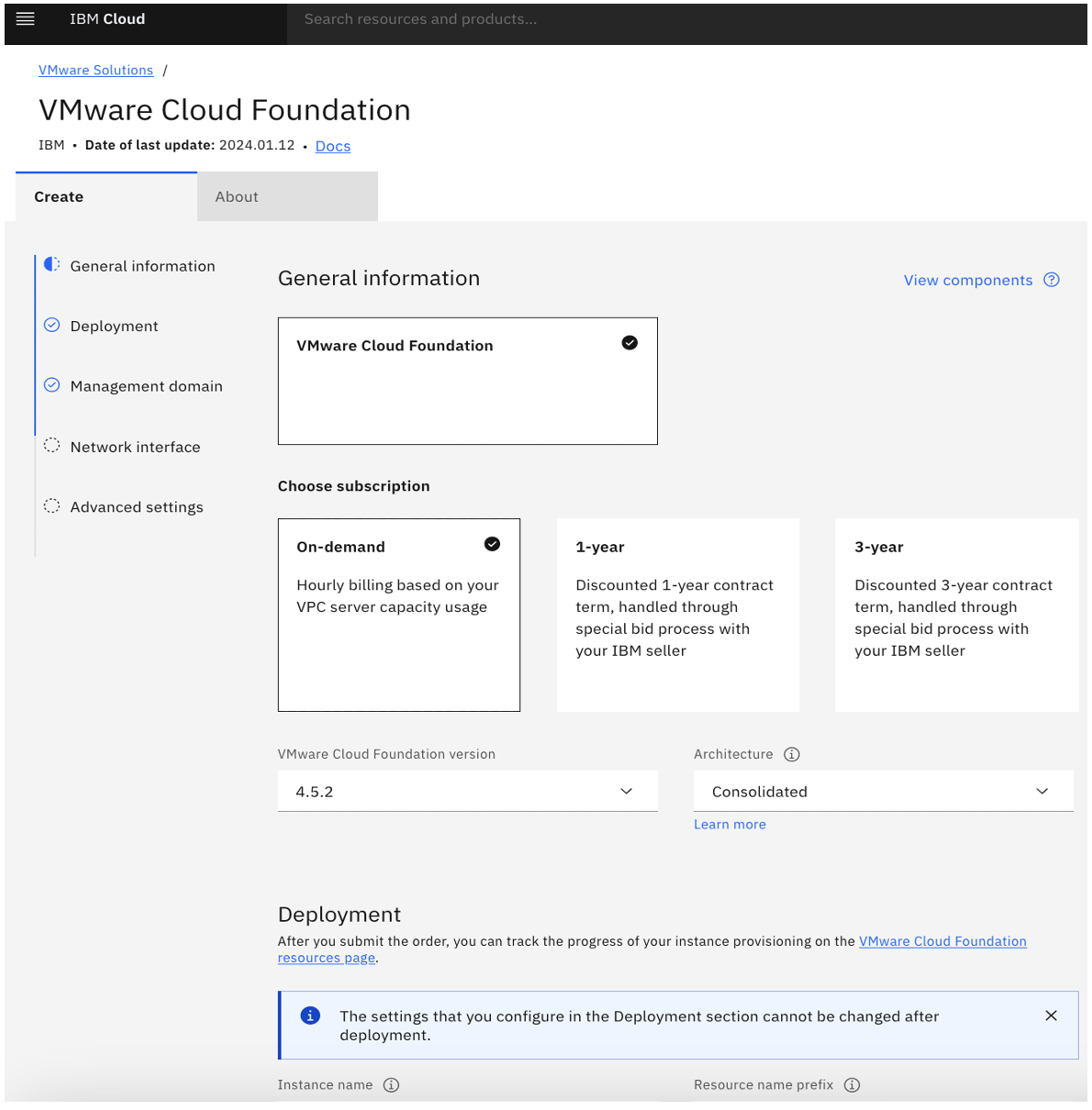
VMware Cloud Foundation on IBM Cloud: Your easy button for VCF Deployments Greg Collins on January 24, 2024 at 10:07 pm

To kick off the 2024 New Year, the IBM & [...]

By |2024-02-03T02:50:33+00:00February 3, 2024|VMware : Cloud|0 Comments

The Multicloud Landscape: Global Trends, Sovereignty, and Cisco’s Strategic Support Ravi Koulagi on February 1, 2024 at 3:15 pm

Cloud Trends

There are two major global trends that are shaping the cloud market. Customers across various segments are on a cloud adoption and cloud-native journey as they embark on application… Read more on Cisco Blogs

​[[{"value":"

Cloud Trends

There are two major global trends that are shaping the cloud market. Customers across various segments are on a cloud adoption and cloud-native journey as they embark on application modernization to participate in an application-driven economy. At the same time, geo-political developments have increased focus on data privacy, security, and operational sovereignty.  Countries, governments, and industries are evaluating options for better application and data infrastructure control. This control includes aspects like

where data gets stored,
who has access to data,
who operates the infrastructure that runs applications and stores the data

The following pictures describe various levels of sovereignty expected by customers. Customers will adopt one or more suitable sovereignty levels depending on the sensitivity of the applications and data.

Example mapping of a country’s data classification framework to cloud operating models

Strategic Cloud Planning

The first step to creating a sovereign cloud strategy for any country or business is to classify the data and workloads they rely on. The classification needs to consider the sensitivity and criticality of data and associated applications. The critical question is, “What is the impact on the government or services if a particular workload or data gets compromised?”. The compromise could be a data leak, data theft, and workload compromise, leading to service disruption.  Based on such a classification framework, governments can place the right workload and data in the right cloud service. Sometimes, both sensitivity and cost must be considered in workload and data placement decisions. Depending on which workload and data we are talking about, cost considerations might be of lower priority to maintaining the sovereignty of the data and services.

Sovereign Multiclouds Strategies in Action

A key example of a country that has a sovereign multicloud strategy and is executing towards it is Italy. Based on the Italian government’s mandate, Telekom Italia is building a sovereign cloud infrastructure for various industries to adopt and get on the cloud journey. Cisco is proud to be a strategic partner in this initiative. Another key country in the Middle East is on its journey towards a similar cloud adoption journey. The sovereign multicloud trend is not restricted to governments alone, as many regulated industries like the banking and financial sector and healthcare sector are actively developing their sovereign multicloud strategy.

Given this background, any technology solution to build a private sovereign cloud should be able to be built and operated at any of those levels. At the same time, customers expect the experience of consuming services from such an infrastructure to be as close to the experience of consuming from a rich public cloud service.

The following high-level block diagram shows various building blocks of hardware and software components, making a private sovereign cloud that delivers a public cloud-like experience.

Cisco Sovereign Cloud Stack

Cisco: Your Sovereign Cloud Strategic Partner

Cisco is committed to working with our partners and customers to deliver a validated sovereign cloud stack that helps customers adopt the cloud with all security and sovereignty requirements addressed carefully.  This is where Cisco’s power of portfolio comes into play and plays a very differentiated role in our customers’ journey to the cloud. Besides building sovereign cloud infrastructure, Cisco can help our customers Connect, Secure, and Observe their sovereign multicloud environments, as shown below.

Capabilities for Sovereign Multicloud Journey

So, whether you are a Cisco customer looking to embark on your sovereign cloud journey or a Cisco partner wanting to help your customers develop their cloud strategy, we welcome the opportunity to be your strategic partner and enable this journey!

Share

"}]]  Global cloud trends drive a shift towards sovereignty, with countries and industries seeking control over data and infrastructure.  Read More Cisco Blogs 

By |2024-02-02T00:53:36+00:00February 2, 2024|Cisco: Learning|0 Comments

Interview: Former FBI Analyst on the CJIS MFA Mandate & Duo Sandy Hawke on February 1, 2024 at 1:00 pm

Recently, the FBI updated their CJIS (Criminal Justice Information Security) policy to require MFA for accessing any application housing CJIS data. Thankfully, we have a former FBI analyst on the… Read more on Cisco Blogs

​[[{"value":"

Recently, the FBI updated their CJIS (Criminal Justice Information Security) policy to require MFA for accessing any application housing CJIS data. Thankfully, we have a former FBI analyst on the Cisco Security team who can break it all down for us.

Questions:

1. You’re currently the PMM Leader for Government and Public Sector at Cisco. Before joining Cisco, you spent 25 years supporting the United States Intelligence Community for various agencies. What do you see as the connections between these two careers?

St. Laurent Reply:

First off, I love contributing the skills and expertise I have gained over the years and use them within my current dynamic and innovative marketing manager role.  Two years ago, I transitioned into the marketing domain as a Security Product Marketing Manager for the US Public Sector here at Cisco.  This role aligns perfectly with my passion for staying at the forefront of computer and network security, computer forensics, insider threats, and the thousands of criminal Investigations that take place.

In my current role, I am particularly drawn to Cisco’s commitment to providing first-in-class security solutions tailored to the needs of the US Public Sector entities and their missions. The prospect of leveraging my insider knowledge and industry connections to drive marketing strategies for security products that directly support “Mission” of federal agencies is both thrilling and rewarding.

Throughout my career with the FBI, NSA, and supporting roles within the Intelligence Community and Department of Defense, I have honed my abilities in navigating their complex mission landscape. I’ve gained invaluable experience in understanding and addressing the unique security challenges, mission requirements, and investigative work faced by these agencies. My extensive background, as well as many years of experience and hard work, has equipped me with a strategic mindset and a keen understanding of the importance of cutting-edge security solutions in safeguarding sensitive information from an investigative standpoint.

2. What was the workflow like for you when you tried to access CJI data when you were in the field for the FBI?

St. Laurent Reply:

As a member of the Computer Analysis Response Team (CART) and the Cryptographic and Electronic Analysis Unit (CEAU) at the FBI, I had to take many certifications and classes related to forensics analysis, cybersecurity, operating systems, network security, and law enforcement.  At the FBI Academy alone, I had 616 hours of specialized training in computer forensics, network forensics, computer administration and programing, and network administration. At the National Security Agency Cryptographic School, I had 930 hours of specialized training in computer security, encryption, programing, network security, and system engineering and administration.  To put this in perspective, a typical 3 credit class from a university is 40 hours.

These certifications and classes focused on specific skills and knowledge areas relevant to my role and agency mission, such as digital forensics, cyber investigations, intelligence analysis, and access to CJI and classified data. A lot of my casework as an investigative lead or support role on a case produced CJI data. Of course, we worked on forensically sound images of the digital evidence. Meaning it was collected, analyzed, handled and stored in a manner according to the law.

3. Describe the new FBI CJIS MFA mandate, what’s driving it, and what do you expect to be the biggest impact for IT teams and officers in the field?

St. Laurent Reply:

The FBI CJIS division introduced the Multi-Factor Authentication (MFA) mandate as part of their ongoing efforts to strengthen the security posture of systems and networks that handle sensitive law enforcement data.  The president of the United States also mandated Executive Order 14028 which establishes a baseline of security standards and mandates the use of phishing-resistant multi-factor authentication and encryption.

MFA adds an additional layer of security beyond traditional username and password combinations, requiring law enforcement users of CJIS systems to provide multiple forms of identity before accessing a system. This helps reduce the risk of unauthorized access, enhancing overall security.

I think the biggest impact for law enforcement in the field accessing CJIS information is going to be ease of use.  So, training and vendor support, documentation, and technical assistance are of utmost importance, so that law enforcement can focus on mission.  By the same token, it is important for law enforcement users to understand that multi-factor authentication has become a standard best practice in the cybersecurity industry to mitigate risks associated with compromised credentials.  It is a needed defense-in-depth approach to security. By implementing multi-factor authentication, the FBI will improve the security of access to CJIS systems and protect the confidentiality and integrity of CJI information.

4. What is your advice for IT teams in the law enforcement community who are struggling with implementing these new requirements?

St. Laurent Reply:

Cisco Duo makes it easy to deploy and maintain MFA for law enforcement agencies at the federal level, and within county and state governments as well. Cisco Duo supports many authentication factors, like Passwordless biometric authentication, making it simple for end users to adopt and use. IT admins can rollout out Duo in a single weekend, with extensive and intuitive user documentation to support them.

But do not just use Cisco Duo for MFA alone.  Let’s think about defense-in-depth.  Cisco Duo has other great features and security controls that are available as part of their access management solution. For example, Duo offers device posture checks and will prompt the officer or law enforcement personnel accessing CJI from an insecure (out of date) device and walk them through how to fix it before they can access the application or CJIS system.  Remember, the journey to a complete zero trust security model starts with a secure workforce.

5. How can teams stay on top of threats that target law enforcement agencies’ infrastructure, applications, and data?

St. Laurent Reply:

I see three critical ways law enforcement organizations can protect against targeted threats using Cisco Security portfolio to enhance their cybersecurity posture and harden their defenses. First is to take a holistic approach – one that Cisco can uniquely offer. By integrating security controls across users, devices, networks, clouds and applications, Cisco delivers holistic security across an entire IT environment. This breadth of capabilities enables a layered defense against various threat vectors. As an example, Cisco XDR (Extended Detection and Response) helps intelligently prioritize incidents as well as promote a resilient security strategy using the Cisco Portfolio as well as other vendor products. See my Blog Cisco XDR: SLEDs “SOC in A Box, for detailed information.

The second key factor is incorporating threat intelligence into your defenses. Cisco Talos is baked into and feeds our entire Cisco Security portfolio. Talos’ real-time threat intelligence helps organizations stay ahead of emerging threats.

One example is how our Cisco Next-Generation firewalls inspect and control network traffic, blocking malicious content and preventing unauthorized access. Other examples include how Cisco Secure Email Threat Defense and Cisco Secure Web Appliance protect against emerging phishing, malware and other email and web-based threats.

Finally, visibility is key. My time with the Director of National Intelligence National Insider Threat Task Force as their chief architect taught me the importance of network visibility and the necessity of behavioral analysis on networks.  Cisco Secure Network Analytics (SNA) (formally known as Stealthwatch) leverages behavioral analytics to establish a baseline of normal network behavior and identify deviations from this baseline that can indicate potential security threats and insider threat activity.  Cisco SNA gains comprehensive visibility into network traffic, applications, and user behavior utilizing your already in place network as a sensor.  With Cisco SNA, you can conduct detailed analysis of security incidents, identify the root cause, and take appropriate remediation actions.

6. Do you have other recommendations for IT teams supporting law enforcement agencies?

Yes. Consider pursuing a zero-trust architecture beyond MFA by implementing Cisco Secure Access solutions, such as Cisco Identity Services Engine (ISE) to control and monitor access to network resources and simplify access management

For more information on how to meet the new CJIS requirements, download our newly published Solution Guide: https://duo.com/assets/pdf/Duo_FBI-CJIS_Guide.pdf

Additional resources:

https://www.fbi.gov/services/cjis
CJIS Security Policy updates for v5.9.2

FBI Criminal Justice Information Services Division – Using Data to assist law enforcement

We’d love to hear what you think. Ask a Question, Comment Below, and Stay Connected with Cisco Security on social!

Cisco Security Social Channels

InstagramFacebookTwitterLinkedIn

Share

"}]]  Hear how law enforcement agencies can more easily meet the new MFA mandates from the FBI CJIS Security Policy using Cisco Duo in this interview.  Read More Cisco Blogs 
By |2024-02-02T00:53:36+00:00February 2, 2024|Cisco: Learning|0 Comments

Retail Tech Deep-Dive: Webex Connect Anjana Iyer on February 1, 2024 at 4:32 pm

Join us as we dive deeper into Cisco and Cisco Partner technology deployed at the Cisco Store! We asked Jeremy Martin (Sales Leader, Americas, Webex CPaaS Solutions) to discuss Webex Connect and how… Read more on Cisco Blogs

​[[{"value":"

Join us as we dive deeper into Cisco and Cisco Partner technology deployed at the Cisco Store! We asked Jeremy Martin (Sales Leader, Americas, Webex CPaaS Solutions) to discuss Webex Connect and how it is used in the Cisco Store and the larger retail industry.

Jeremy leads sales in North and South America for the Webex cloud communications platform (CPaaS) solution. He has more than two decades of experience helping clients and partners create and grow innovative omni-channel digital engagement between brands and consumers. With several leadership roles over the years, Jeremy has deep mobile industry expertise that’s been leveraged across many vertical markets including retail, healthcare, pharmacy, telecom, hospitality, utilities and transportation.

How does Webex Connect improve a shopper’s in-store and/or virtual shopping experience? What problem is it solving?

Webex Connect is an enterprise-grade Communication Platform as a Service (CPaaS) for orchestrating and automating end-to-end customer journeys in a single, cloud-based solution.

Our CPaaS solution revolutionizes customer experiences by streamlining processes such as order status notifications, refunds, and returns inquiries. Customers are empowered to self-serve, effortlessly modifying orders or updating delivery information through the seamless integration of AI-driven chatbots.

With Apple and Google owning the lion’s share of mobile operating systems (including the default messaging apps as well as maps applications that power local search), consumers are increasingly seeking and initiating conversations with brands through non-traditional channels (Apple Messages for Business, Google Business Messages). Webex Connect provides rich, integrated customer engagement, helping to drive navigation to stores, answer questions on hours and inventory, and reach retail associates to answer more complicated questions.

Plus, Webex Connect integrates into existing backend systems, allowing retailers to harness valuable customer data for creating personalized shopping experiences across various channels.

Retailers these days are competing on customer experience (CX), so the ability to deliver distinctive experiences is essential. And with the automation Webex Connect enables, employees’ time is freed up to focus on more important tasks.

What would you like people to know about Webex Connect when they see it in action at the Cisco Store Tech Lab?

Webex Connect plays a pivotal role in enhancing operational efficiency for the Cisco Store. Leveraging this platform, the team has successfully programmed contextual prompts and implemented a responsive chatbot to address simple customer queries round-the-clock. As an enterprise-grade CPaaS solution, Webex Connect is accessible to everyone: developers and businesses alike can create end-to-end customer journeys within the platform. Its user-friendly features, such as low-code tools and drag-and-drop flow builders, foster a collaborative environment across the entire business.

How do you envision Webex Connect being used in retail environments in the future?

We anticipate businesses leveraging CPaaS not only to adopt the latest communication channels, but also to craft synchronized customer journeys at every touchpoint. Think: experiences where every interaction works together to build a cohesive, multi-channel journey.

AI is also here to stay. As organizations invest in data, machine learning, and AI capabilities, they gain the tools to understand customers at a granular level; Webex Connect provides out-of-the-box AI capabilities as well as seamless integration with retailers’ existing AI platforms and investments. And with CPaaS, AI stands to make automated, self-serve interactions better, faster, and more cost-effective.

What do you think will be a priority for shoppers in the next 5 years?

Convenience is expected to remain a top priority for customers in the future. A seamless fusion of online and offline shopping experiences, like buy online and pick up in-store (BOPIS), is also likely to be a focal point. Customers will begin to expect proactive outreach rather than initiating reactive support – they want brands to anticipate their needs before they even know of them themselves.

Likewise, what do you think will be a priority for retailers in the next 5 years?

Currently, 75% of connected customers prefer to interact with retail brands using digital messaging channels – and that’s only expected to increase. So, to be consistent with consumer preferences, brands will continue to prioritize digital-first, personalized communications, which will become more integrated and more sophisticated by improving how customer data and touchpoints are leveraged. We anticipate they’ll also have a major focus on automation to boost efficiency and reduce costs.

Interested in learning more about Webex Connect? Visit our retail solutions page or get in touch with one of our experts.

Share

"}]]  Webex CPaaS Solutions sales leader Jeremy Martin sheds light on Webex Connect and its impact on the Cisco Store and larger retail industry.  Read More Cisco Blogs 

By |2024-02-02T00:53:35+00:00February 2, 2024|Cisco: Learning|0 Comments

Cisco AppDynamics observability solutions help partners expand their business Mark Maslach on February 1, 2024 at 4:00 pm

Only Cisco offers a unified solution to address full-stack observability (FSO) use cases across all major industries

Every day, hundreds of millions of people buy groceries, book travel, order… Read more on Cisco Blogs

​[[{"value":"

Only Cisco offers a unified solution to address full-stack observability (FSO) use cases across all major industries

Every day, hundreds of millions of people buy groceries, book travel, order supplies, apply for jobs, qualify for mortgages, and much more using apps on their computers and phones. Today, it’s safe to say that virtually all our most important transactions are digital.

But what seem like simple transactions to end users are, in fact, deeply complex processes relying on dozens of interdependent cloud-native services across multiple networks. There are a million different places where things can go wrong. A recent study by IDC shows that 80 percent of companies still struggle to deliver flawless digital experiences to end users. And when businesses are unable to identify and resolve problems quickly, they risk losing revenue and damaging customer loyalty. Nearly half of companies surveyed say each hour of downtime costs them $250,000 or more.

At Cisco AppDynamics, we believe enabling observability across the entire stack of IT services is essential to ensuring a safe and reliable digital experience.

The key to our success has been our strong partner ecosystem. For the last several years, Cisco’s partner programs have earned a five-star rating by CRN, and 2023 was no different. We’re proud of our work with partners and even prouder of our combined performance in a volatile and highly competitive market. I believe that 2024 will be even better.

How FSO will grow in 2024

The observability tools and platforms market was worth $2.4 billion in 2023 and is growing at double digits annually. But the total addressable market is many times larger. The opportunities for future growth are staggering.

Yet the vast majority of organizations still struggle with integrating multiple observability point solutions across their hybrid cloud environments. Tool sprawl is rampant. Resource overhead continues to increase while coverage gaps persist. Less than one in five enterprises say they’re using a full stack observability (FSO) solution that meets all their needs.

Enabling observability across the entire technology stack is the only way to ensure organizations can identify, prioritize, and resolve issues in a timely and secure fashion.

Cisco Full-Stack Observability is the only solution that seamlessly integrates multiple tools and ties application performance to real-world business impacts. Built from day one leveraging the OpenTelemetry framework, Cisco’s integrated FSO solution provides a scalable, single source of insight across your technology stack. With help from its vibrant ecosystem of development partners, Cisco FSO can tackle an increasingly expansive range of use cases.

For example:

Retail. It’s Black Friday. Traffic to a customer’s ecommerce sites and app usage are up 10X. A failure at any point in their tech stack could cost millions in lost sales. By deploying Cisco AppDynamics and ThousandEyes, retailers can quickly identify app dependencies and pinpoint the source of failures, slashing mean time to resolution.
Financial services. Banks, insurance, and trading firms must minimize business risk while maintaining strict regulatory compliance. Cisco Cloud Observability and Security Insight modules allow financial institutions to automate security functions and reduce vulnerabilities.
Oil and gas. With dozens of siloed ERP systems, oil and gas companies maintain some of the most complex IT architectures in the world. AppDynamics, ThousandEyes, and SAP monitoring can provide visibility into all of these systems, allowing firms to break down silos, gain insights, and reduce complexity.
Hospitality. For the hospitality industry, service is everything. When their apps or websites go down, customers go elsewhere. Hotels, travel bookers, and cruise lines use AppDynamics and ThousandEyes for end-to-end visibility of critical failure points within applications and networks, enabling them to react quickly and decrease downtime.
Public sector. With hundreds of public-facing applications to maintain, government IT offices need to identify and isolate security and performance issues as quickly as possible. AppDynamics and Cisco Secure Application offer full visibility over critical workflows and environmental security, increasing uptime and improving the citizen-user experience.

The possibilities extend from there. Every enterprise in every industry needs a single source of insight that can scale across its technology stack and business. As practical use cases for FSO increase, Cisco’s vibrant ecosystem of development partners enjoy greater opportunities to build new product offerings around these tools, expanding their customer base and generating new revenue streams.

On the path to full observability

Apps and websites are the storefronts of the 21st century. People expect a seamless experience, and if they don’t get it, they’ll go elsewhere.

But use cases vary widely across industries, as do the solutions needed to address them. Only Cisco Full-Stack Observability solutions are flexible enough to address the widest range of use cases while still enabling a complete view into operations across the tech stack.

For example, Cisco’s new Smart Agent orchestration technology automates the management of application monitoring agents across their entire lifecycle, simplifying deployment, and ensuring every agent is always up-to-date and secure.

Cisco has the breadth of coverage to meet your wherever they are on their path to full-stack observability — whether it be for on-prem, hybrid, or cloud environments for both traditional and cloud-native workloads — and AppDynamics has the scale, flexibility, and extensibility to cover any custom and future use cases related to your business. You can meet your customers where they are today and help them get where they want to be tomorrow.

Learn more about AppDynamics, Full-Stack Observability, Smart Agent for AppDynamics, monitoring for SAP solutions, and other solutions and resources on the AppDynamics Partner Hub on SalesConnect  (Partner authentication required).

Share

"}]]  Every enterprise in every industry needs a single source of insight that can scale across its technology stack and business. As use cases for FSO increase, Cisco’s vibrant ecosystem of development partners have greater opportunities to build new product offerings around Cisco Full-Stack Observability solutions, expanding their customer base and generating new revenue streams.  Read More Cisco Blogs 

By |2024-02-02T00:53:35+00:00February 2, 2024|Cisco: Learning|0 Comments

Game on: Level up your AI knowledge with Cisco U. Joe Clarke on February 1, 2024 at 6:11 pm

I have been at Cisco many years and seen a few transformational events affect network engineers. After I first joined Cisco in 1998, IP telephony came on the scene and disrupted not only classical… Read more on Cisco Blogs

​[[ Join the Cisco Learning Network.

Follow Cisco Learning & Certifications

Twitter ]]  Discover the transformative power of AI in the networking industry. Explore the different types of AI, real-world examples in Cisco solutions, and how you can grow your networking career with Cisco U. tech learning and the Enterprise Network Assurance (ENNA) Specialist certification.  Read More Cisco Blogs 

By |2024-02-02T00:53:34+00:00February 2, 2024|Cisco: Learning|0 Comments

New Technology for an Old Industry – Coffee and Conversations podcast Beth Comstock on February 1, 2024 at 1:07 am

A few weeks ago our mining experts sat down with Danny Vicente from Cisco’s Coffee and Conversations to discuss what is taking place in the mining industry. In this episode Roland Plett and Bruce F… Read more on Cisco Blogs

​[[{"value":"

A few weeks ago our mining experts sat down with Danny Vicente from Cisco’s Coffee and Conversations to discuss what is taking place in the mining industry. In this episode Roland Plett and Bruce Frederick talk about how mining has evolved from the soot faced man in a hard hat holding a canary in a cage in one hand and a pick axe in the other to driverless trucks and tele-remote workers running the equipment from gaming chairs well above the earth’s surface.

Mining has grown dramatically in the last 10 years due to the necessity of minerals and mining to support green initiatives and sustainability. The improvements that this increased demand has necessitated include environmental, worker safety and security and business. Below are just a few of the examples of the efficiency that technology has brought to the mining industry.

Environmental improvements

Mining companies are increasingly investing in reestablishing natural environments impacted by their operations. Key initiatives include:

Water Source Protection: Rigorous measures are in place to safeguard water sources, ensuring responsible water management.
Land Stewardship: Mining companies prioritize responsible land stewardship, with reclamation projects aimed at restoring the land post-mining activities.
Electrification of Operations: The shift towards electric trucks, replacing traditional diesel vehicles, contributes to reducing the industry’s carbon footprint.
GPS Technology: Innovations like GPS-equipped dozer blades enable automatic grade adjustments for optimal water flow, facilitating efficient land reclamation.

Safety Improvements for Workers

Ensuring the safety of miners remains a top priority, and technological advancements are playing a pivotal role:

Tele-Remote Dozing: Human operators can now control bulldozers remotely from a safer location, eliminating the need to expose workers to hazardous underground environments.
Stress Monitoring Systems: Cutting-edge technologies monitor driver stress levels, providing alerts to dispatch if fatigue is detected, enhancing overall safety.
Slope Monitoring: Various sensors, including strain gauges, radar systems, and heat sensors, are utilized to monitor slopes, providing real-time data on potential instabilities.
Digital Twins for Environmental Modeling: Utilizing 3D modeling originally designed for video games, mining companies can create digital twins to assess the impact of their operations on the environment.

Financial Improvements

Every minute that operations stop can cost mining companies millions of dollars, so they are leveraging technology to optimize financial performance and operational efficiency:

Predictive Maintenance: Sensors provide imminent failure information, enabling proactive maintenance to prevent costly equipment breakdowns.
Ore Grade Monitoring: Tools like X-ray sensors on shovels assist in monitoring ore quality, optimizing production efficiency.
Data-driven Explosive Decisions: Fragmentation measurement tools aid in determining rock hardness, optimizing the use of explosives during mining.
Tele remote work: Not paying workers to commute from housing to the mine and then down to the equipment underground allowing them to not just work safer but smarter since one operator in a gaming chair can control multiple pieces of equipment.

These advancements represent a shift in the mining industry, showcasing a commitment to environmental responsibility, enhanced safety measures and improved financial performance. As technology continues to evolve, Cisco is providing the communication, connectivity, and automation technologies that play a crucial role in enhancing operational efficiency, safety, and overall productivity.

Together the mining sector is poised for further transformative changes, ensuring a more sustainable and responsible future.

Watch or take a listen to the episode to find out more!

Available on:  Apple Podcasts  |  Spotify  |  YouTube

Share

"}]]  Technological advancements represent a shift in the mining industry, showcasing a commitment to environmental responsibility, enhanced safety measures and improved financial performance.  Read More Cisco Blogs 

By |2024-02-01T11:51:14+00:00February 1, 2024|Cisco: Learning|0 Comments
Go to Top