About (Edit profile)

This author has not yet filled in any details.
So far has created 1829 blog entries.

Cisco Full-Stack Observability Platform: Rapid Development and Partner Collaboration Geoffrey Hendrey on August 19, 2023 at 3:04 am

Collaboration was key in the development of the platform

In June 2022, Cisco announced plans to develop Cisco Full-Stack Observability (FSO) platform, expanding upon the foundations set by… Read more on Cisco Blogs

Collaboration was key in the development of the platform

In June 2022, Cisco announced plans to develop Cisco Full-Stack Observability (FSO) platform, expanding upon the foundations set by AppDynamics Cloud. By February 2023, during Cisco Live Europe, we introduced the tech preview of Cisco FSO Platform. In just six more months, our promise of general availability was fulfilled by Cisco Live US, and we exceeded initial expectations by releasing six innovative modules.

A significant aspect of this achievement was our collaboration with external partners. Rather than solely do the development in-house, many of these modules were built by partners trained on the FSO platform. They utilized its tools and SDKs to create these modules, which were then published on our App Exchange. Rather than having a platform land with a thud, Cisco FSO Platform launched with enthusiastic partners who helped battle test it, and whose modules offered very real, market leading value from the outset.

The modules, available now on Cisco FSO Platform App Exchange, introduce features ranging from real-time cost insights to machine learning-based Kubernetes performance optimizers.

Being open, extensible and programmable makes the platform powerful

At its core, the platform incorporates a comprehensive MELT fabric — Metrics, Events, Logs, and Traces. This system is designed to efficiently process vast amounts of data from diverse digital systems. But the real power of the platform doesn’t just stem from MELT storage and query. It derives from seven powerful features that can be programmed collectively, or individually, and a unique application packaging system for deploying these solutions to the Cisco FSO Platform exchange. From the customer point of view, this manifests in the form of subscription solutions that can provide diverse feature sets, ranging from small enhancements to full-blown applications with a specific industry focus. From a competitive point of view we can confidently say that the platform offers the most sophisticated and comprehensive approach to building cloud native full stack observability solutions.

Before we dig into the pieces of the platform and the development model, consider for a moment the challenge of what it even means to define this new category of application – the MELT app. Perhaps the best analogy for what the platform provides, is that it acts as a distributed operating system that governs the complete lifecycle of MELT data, from collection and ingestion to processing, storage, and query. This means that a MELT app is a distributed application, and the complexity could easily spiral out of control.

Consider distributed microservices based “applications.” They are themselves so complex and so distributed that in many ways they are the raison d’etre for monitoring platforms such as Cisco FSO Platform. When we approached the problem of how to enable this “MELT app” we knew that we had to embrace the concept of declarative versus imperative, applications. We had to provide a very clear framework versus a low-level free-for-all. That is to say, a Cisco FSO MELT app is a set of declarations, each declaration telling a particular piece of the platform how it should behave.

How Cisco FSO Platform works

A winning, customer-centric governance model from the get-go

We also knew that the platform had to provide solid isolation primitives that would guarantee that App A and App B could safely co-exist. We took to heart the idea that the data flowing into the platform is absolutely owned by the customer, and that applications are guests that a customer grants revocable privileges to. We heard arguments that “applications ingest data” and “apps own the data.” We soundly rejected these ideas. The customer ingests their data. The customer owns their data. An application is a guest that a customer invites and allows to perform clearly articulated, non-destructive, actions on the MELT stream.

With that preamble out of the way let’s dig into the primitives that the platform exposes to solutions.

Dashboards and Microsites – MELT UI may be the most important and front-facing component of the platform. Dashboards are not just a way to throw charts onto a page. They are a comprehensive framework that applications can leverage to build fully interactive experiences on MELT data. When we took on the challenge of data driven visualization, we knew we couldn’t just coexist with Grafana dashboards. We had to do something game-changing and raise the bar. We aspire to be nothing less than the best MELT dashboarding platform in the industry. While we can’t explain it all in this summary, the nutshell is that we embrace an emerging standard called JSONata for the manipulation of JSON data that puts the dashboard builder radically in control of how data is transformed and manipulated so that virtually any data source can be paired with any visualization. On top of that, microsites allow our solution developers to provide containers that serve their application experiences from the backend frameworks and languages of their choice, while maintaining a consistent authn/z experiences for the user. This comprehensive approach to UI provides partners with an unequaled set of capabilities.
Extensible Access Control – In a dynamic digital environment, one-size-fits-all access controls are too restrictive. Our platform’s extensible access control adapts to varying application domains. Developers can easily create domain-specific roles, ensuring precise and secure access over features that they themselves provide. Customers benefit from robust, customizable roles ensuring their data is only accessed by the right personnel. Developers are unlocked to create new roles that make sense for their own verticals vs generic “admin” roles that may be too broadly scoped.
Cloud Collectors and Custom APIs – It would quite literally be impossible to predict the shape and variety of APIs that partners and solution developers want to integrate. The platform’s support for custom data gatherers, or “cloud collectors” allows the developer self-service over their integrations. Developers can gather data from diverse endpoints using any programming language with containerized collectors. For businesses, this means unparalleled flexibility in data integration and the capability to extend the platform’s API for unique needs.
Knowledge Store – The knowledge store, acting as the platform’s distributed brain, stores non-MELT related information. This can be anything from an investigation workflow, to a dashboard. The knowledge store is internally globally replicated and layered but presents as a simple store. This vastly simplifies the developer’s lifestyle. Developers can create “knowledge models” that extend the knowledge store with new types. For example, if a developer wanted to create a solution that allowed an investigation to be linked to a health rule violation, the developer is empowered to totally define the concept of an investigation through Knowledge modeling. The global, multi-region nature of the knowledge store means that developers don’t have to worry about, or even know that customers reside in multiple cells across multiple regions globally. Just push a simple knowledge model to the platform and you are good to go, regardless of how many customers around the globe subscribe to your app.
Serverless Workflow – Observability pipelines can be notoriously hard to wrangle. By implementing the CNCF Serverless Workflows and Cloud Events standards, Cisco FSO Platform allows third-party developers to inject both simple and intricate behaviors into the observability pipeline. This allows domain specific transformations, and even the derivation of new data off the arriving stream.
Entity Modeling – With roots in AppDynamics’ Application Performance Monitoring, our enhanced entity modeling organizes complex signals into intelligible insights. Developers can model domains with the Flexible MELT Modeling language, correlating signals across domains. Customers get a layered view, enabling precise problem pinpointing and resolution. The key to entity modeling is that it provides a domain specific, organizational scheme for the vast quantities of data that customers ingest. Without entity modeling, most tasks begin with just figuring out where and what a particular error came from. With deep support for entity modeling, domains can provide full stack correlation of data immediately. For example, supposing you are a metropolitan European transit agency tasked with providing on-time performance reporting in compliance with EU regulations. Entity modeling allows you to create entities representing both real physical assets such as vehicles reporting live telemetry, as well as roll-up entities such as cities and regions that monitor large-scale aggregate performance. Errors affecting turnstiles and card readers can immediately be correlated up the stack to the station and regions effected, as well as down the stack to clusters, nodes, and processes. This is full stack observability.
Health Rules – Health rules are a critical part of providing a full stack experience for customers. Developers can provide health rules that are integrally aware of the entity models and domains provided in the developer’s solution. Returning to the example of stations and vehicles, the definition of a station’s health depends on factors that are likely understood in great detail by the developer of the full stack transit monitoring solution. By including custom health rules, in the solution, behaviors such as linking health to on-time-performance of arriving trains and rider wait times becomes possible. By providing these out-of-the-box, the solution developer is able to provide the customer with a wealth of domain experience that wouldn’t practically be feasible to ask the customer to ‘figure out themselves’.

Get started with Cisco FSO Platform

Share

  Cisco FSO platform is a ground-breaking, customer-centric platform that has both out-of-the-box functionality and ready made modules, and gives you the power to develop what you need for your own specific use cases.  Read More Cisco Blogs 

By |2023-08-19T13:13:41+00:00August 19, 2023|Cisco: Learning|0 Comments

Signpost reminds us that great things are possible through collaboration Noel Burke on August 18, 2023 at 4:19 pm

This blog was written by Andre Heller, Program Director of Signpost. Signpost, is an International Rescue Committee (IRC)-led consortium project that creates digital information hubs to equip and… Read more on Cisco Blogs

This blog was written by Andre Heller, Program Director of Signpost. Signpost, is an International Rescue Committee (IRC)-led consortium project that creates digital information hubs to equip and empower clients in times of crisis. 

Andre Heller – Program Director, Signpost

This year’s World Humanitarian Day theme is “No Matter What” – a recognition that the humanitarian community strives to reach people in crisis with lifesaving assistance, regardless of the dangers or difficulties in making that happen. That tenacious spirit is both fitting and necessary this year. Since last August, long-standing humanitarian crises in places like Syria and Venezuela have not abated. At the same time, new crises have emerged or conditions have deteriorated to alarming extents in countries as far-flung as Afghanistan, Haiti, Niger and Sudan.

In the face of these mounting challenges, it is understandable to feel despair. But there are reasons to hope. People facing unimaginable difficulty constantly find new ways to persist, recover, and eventually thrive. The International Rescue Committee (IRC) sees their courage and resilience firsthand every day. And the humanitarian community that serves them, in partnership with donors and grassroots communities around the world, are developing new and more powerful ways to move humanity to a better place.

A powerful example of this is Signpost, an IRC-led consortium project that creates digital information hubs to equip and empower clients in times of crisis. Signpost platforms deliver critical information through local teams equipped with cutting-edge digital tools — providing communities with timely and actionable information. That information is vital for people to solve difficult and complex problems and make pivotal decisions on their course of action in times of crisis.

After fleeing violence in Honduras, Maria meets with an IRC staff member who shows her the InfoDigna website, a Signpost initiative that provides reliable information for people transiting through Mexico. Photo Credit: Paul Ratje

The correct information at the right time helps people understand big questions like: is it safe to flee the country? Am I eligible for a food program to support my family? Where can I find employment? Where to find the hospital that can help with a chronic illness? How do I enroll my children in a new school in a new city? Where can my family find shelter in a place that is safe from violence?

Signpost helps people approach these questions with up-to-date, accurate information. It is now active in 22 countries across five continents and plans to expand in the months and years ahead.

From the beginning, partnership has been a key element of Signpost’s power and success. Cisco’s support empowered the Signpost technology team to innovate and remove years of backlog. In just one year Signpost built the following technologies that helped exponentially grow the reach and impact of the program:

Service Map Rebuild

A low-code data management system for Service Mapping Officers across the globe to map service locations so our clients can better access the places they need. This tool can connect to chatbots, geospatial data, and manage real-time incoming information.

Universal Analytics Stack

A central hub where all Signpost data is securely stored to facilitate better targeting of humanitarian information and aid in humanitarian advocacy.

New Front End

A quick-deploy and centrally administered web-application deployed to over 10 countries. This template can function online and offline, and store critical information with a utilitarian approach.

IRC staff look at CuentaNos.org in the office in El Salvador. Cuenta Nos is Signpost in Central America.

In the past year of Cisco’s support, Signpost reached 32 million people, served 5.74 million users, with 131,830 unique two-way communications with clients, nearly doubling our impact numbers from all years (2015-2022) preceding. This support led to a 188% increase in reach, 187% increase in users, and 393% increase in two-way communications over last year’s annual count.

In recognition of Signpost’s success in connecting people in crisis with vital and vetted information, the United Nations recently awarded the project with a prestigious Sustainable Development Goal Action Award. There is no question that bold and innovative partnerships like Signpost have a huge role to play in helping the international community both reach the United Nations’ Sustainable Development goals and in helping the humanitarian community serve its clients more broadly.

To learn more about the International Rescue Committee (IRC) and its partnership with Cisco, as well as how you can support and donate, visit the Cisco Crisis Response page and IRC’s website.

Share

  In recognition of World Humanitarian Day, learn more about Cisco's partnership with the International Rescue Committee and Signpost.  Read More Cisco Blogs 

By |2023-08-19T00:49:20+00:00August 19, 2023|Cisco: Learning|0 Comments

Cisco and Accenture Deliver SAP Operational Intelligence Liz Styba on August 18, 2023 at 3:00 pm

SAP availability has traditionally been measured based solely on whether the application is up and running, commonly referred to as uptime or system availability. While this metric is important, it… Read more on Cisco Blogs

SAP availability has traditionally been measured based solely on whether the application is up and running, commonly referred to as uptime or system availability. While this metric is important, it doesn’t fully capture the user experience or the impact on business outcomes. As businesses become more reliant on SAP and other enterprise applications, measuring availability only in terms of system uptime may not be sufficient to understand the actual impact on end-users and the overall business.

To bridge the gap between how IT and the business measure SAP experience, it is essential to consider additional metrics that focus on the user experience and business outcomes.

New service level agreements (SLAs) are now emerging to measure SAP by adding performance benchmarks like experience level agreements (XLAs), as well as network and dialog response times. All the new performance measurements are geared towards whether the company is meeting its planned business outcomes in which SAP is serving as the company’s key application within their digital core.

The combination of traditional uptime metrics and these new performance benchmarks allows for a more holistic assessment of SAP’s effectiveness and its contribution to the company’s success. It also encourages IT and business stakeholders to work collaboratively to optimize SAP’s performance, thus enhancing the overall value derived from this critical application.

Cisco and Accenture have invested in bringing these new performance benchmarks to the forefront through a solution called SAP Operational Intelligence, which combines the Cisco Full Stack Observability (FSO) suite—including AppDynamics and ThousandEyes—along with Accenture’s SAP industry expertise and accelerators. What do customers gain from SAP Operational Intelligence?

Observability across their SAP (and non-SAP) environments, providing visibility and performance insights into the applications and infrastructure running their organizations’ most mission critical business processes.
Real-time diagnostics across SAP and non-SAP components, providing support teams with the insights needed to resolve issues before they impact business processes and end users.
SAP performance aligned with business outcomes, correlating how the SAP application and transaction performance impact each step in their mission-critical business processes through the use of a weighted business scorecard. Such business outcome visibility enables the business, IT, and the network teams a single focus into how application performance is directly impacting their business metrics and revenue streams.

Visibility to siloed application teams

Typically, when SAP application performance issues occur, the application, infrastructure, interface, and networking teams have limited ability to diagnose the root cause based on the toolset available to them. Mean time to repair (MTTR) increases when teams lack the ability to directly collaborate with other teams through a unified platform. Consequently, small incidents become large issues because siloed teams work independently.

SAP Operational Intelligence provides a centralized platform, enabling teams to gain visibility and better understand the overall health of the SAP system. Intelligent dashboards and a single monitoring platform facilitate collaboration and communication between teams, allowing them to work together efficiently to address issues and resolve them proactively.

With SAP Operational Intelligence serving as the central hub for monitoring and diagnostics, the barriers created by siloed teams are broken down. This unified approach fosters quicker incident resolution, reduces MTTR, and prevents minor problems from escalating into larger disruptions.

Visibility to SAP Basis administrators

Start with the SAP observability command center

How to get started gaining SAP Operational Intelligence? Begin by talking to Cisco and Accenture about putting an SAP observability command center in place. Three typical use cases often drive this decision:

SAP Management: Configure the AppDynamics cognitive engine, gaining analytics and insights to reduce outages, decrease MTTR, and eliminate false alerts.
Business Observability: Add process monitoring and key performance indicator (KPI) reporting. Use AppDynamics to provide business process journeys and KPIs supporting multiple personas.
End User Experience Monitoring: Use the Digital Experience management capabilities of AppDynamics coupled with ThousandEyes Synthetics and automated scripting to identify network performance challenges and proactively improve end user experience.

Of course, these use cases represent only the beginning. The end goal is to achieve observability across all applications, available through the Cisco and Accenture partnership.

By embarking on this transformative path and implementing SAP Operational Intelligence, you will optimize SAP performance, align it with your business goals, and pave the way for successful digital transformation across your organization.

Want to learn more? Visit Cisco and Accenture Solutions

We’d love to hear what you think. Ask a Question, Comment Below, and Stay Connected with #CiscoPartners on social!

Cisco Partners Facebook    Cisco Partners LinkedIn

Share

  Cisco and Accenture have invested in a solution called SAP Operational Intelligence, which combines the Cisco Full Stack Observability (FSO) suite—including AppDynamics and ThousandEyes—along with Accenture’s SAP industry expertise and accelerators.  Read More Cisco Blogs 
By |2023-08-19T00:49:20+00:00August 19, 2023|Cisco: Learning|0 Comments

VMware Cloud Director Service Now Generally Available for Azure VMware Solution Eric Horschman on August 15, 2023 at 5:27 pm

Moving your VMware infrastructure to the cloud shouldn’t mean leaving [...]

By |2023-08-18T06:52:02+00:00August 18, 2023|VMware : Cloud|0 Comments

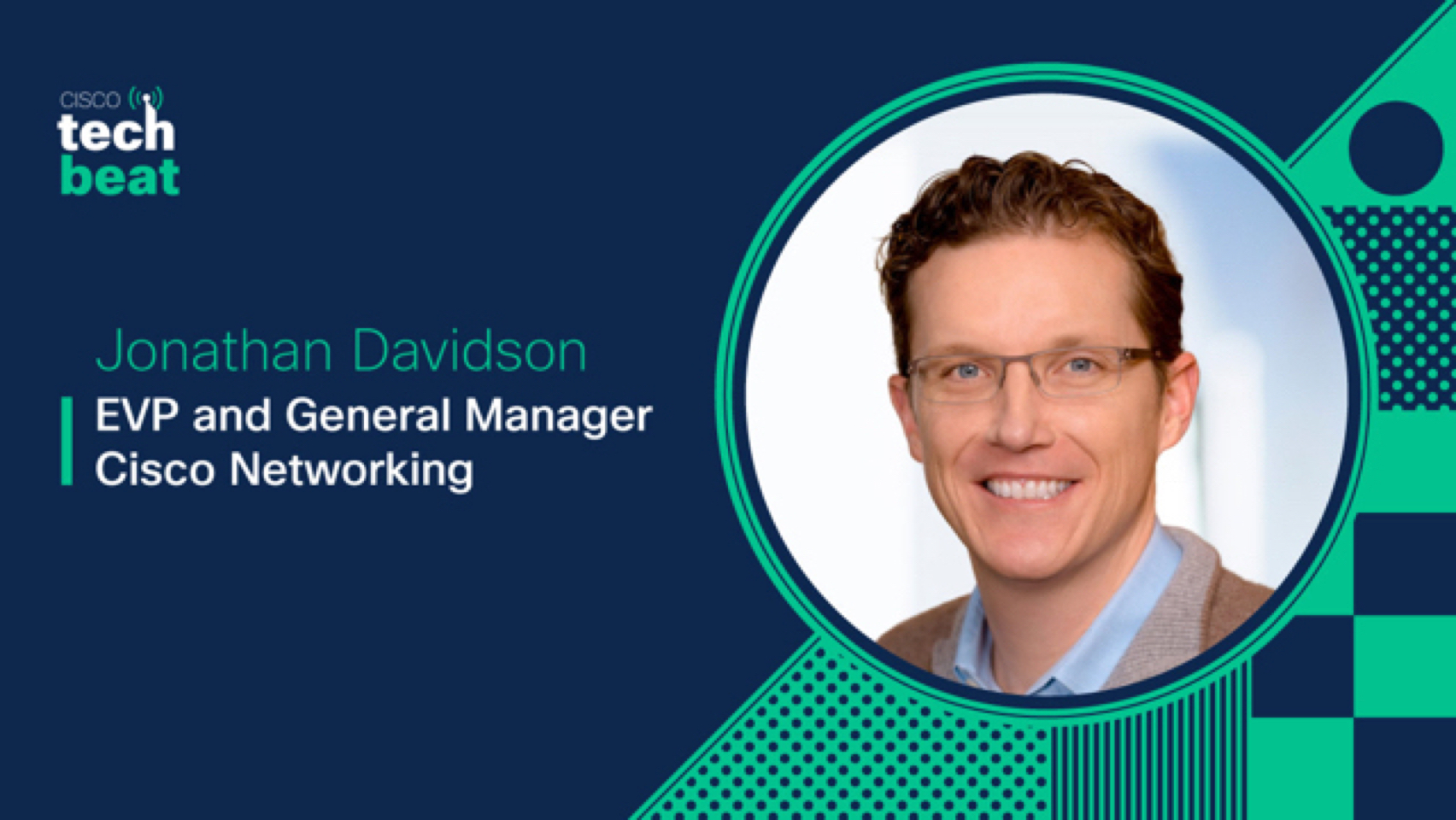
S4 E6: Talking Networking, Leadership, and being the Tom Hanks of Executives, with Jonathan Davidson on August 16, 2023 at 12:00 pm

Join Jonathan Davidson, EVP and General Manager, Cisco Networking, for [...]

By |2023-08-17T21:58:28+00:00August 17, 2023|​Cisco Newsroom: Enterprise Networking|0 Comments

How to Get a Tech Internship in 5 Steps Victoria Trevino on August 16, 2023 at 12:00 pm

As a college student, the search for tech internships is key when determining your chosen career path. If you’re curious to find out what it takes to land an internship or how to stand out among the c… Read more on Cisco Blogs

As a college student, the search for tech internships is key when determining your chosen career path. If you’re curious to find out what it takes to land an internship or how to stand out among the crowd, learn directly from those who’ve done it at Cisco.

Recently, interns in security at Cisco discussed how to get a tech internship by positioning yourself as an ideal candidate. Ready to take the next step? If so, check out our opportunities.

1. Apply Early 

To ensure your application is received on time, according to Pratham Shroff, a software engineering intern working on Duo, “apply now, apply early.” For many organizations, internships can often be posted up to a year out, including Cisco which has internships open now for the fall. Applying early not only reduces the possibility of an internship’s submissions closing ahead of time but also increases your chances of being hired.

2. Find your niche

As you progress throughout your career, being flexible and working cross departmentally can assist with defining your niche and strengthening your skillset to stand out when applying. Shroff states, “Cisco is a really great place to do that.” Shroff also recommends “making your own projects or going to hackathons” to align your interests and enhance your personal portfolio to showcase your talents.

3. Be passionate

Whether it’s your first or fifth interview, “enthusiasm goes a long way,” says Technical Product Management Intern Violet Yu. Not only is it important to research the company you are applying for but having a genuine interest in the cybersecurity industry is a benefit as well. As Shubhangi Tiwari, a technical intern, says, “It’s important to like what you do, otherwise what is the point in pursuing it?” By building a positive rapport from the beginning and showing you’re invested in the topic at hand, you can set yourself apart from other applicants.

4. Network

While it’s important to know what your role entails and what skills you need to perform your role successfully, growing your network is just as valuable. Front-end Web Development Intern Xander Hughes states, “If you can build up your connections within the tech industry, you can go anywhere.” Applicants often have greater success in finding meaningful internship opportunities through networking and establishing professional connections than with standard application methods.

5. Prepare

To better position yourself for a technical interview, preparation is necessary. In some instances, a key portion of the technical interview will center on your knowledge of a specific area in the field. A great way to train for this, as Xander Hughes suggests, is LeetCode, an online resource that allows you to practice real word programming scenarios. Because the technical aspect is only one part of the overall interview process, ensuring that your values align with the overall company culture and mission are also vital.

As a cybersecurity intern at Cisco, you will learn about our core principles and how we embody being kinder than necessary. Through hybrid work and continuous innovation, the possibilities are endless when it comes to the impact you can make in advancing our mission and your career. Implementing the strategies above can help you pursue and procure an internship that you’re energized by.

Ready for your tech internship?

To learn more, please visit our internship openings.

We’d love to hear what you think. Ask a Question, Comment Below, and Stay Connected with Cisco Secure on social!

Cisco Secure Social Channels

InstagramFacebookTwitterLinkedIn

Share

  Here are the top tips for landing a tech internship directly from interns working in tech. Learn how to hone your passion, prepare your skills, and network.  Read More Cisco Blogs 
By |2023-08-16T21:06:44+00:00August 16, 2023|Cisco: Learning|0 Comments

Hybrid Work for Government: Resiliency in Emergency Situations Cindy DeCarlo on August 16, 2023 at 6:21 pm

Hybrid work is a flexible work model that combines in-office, remote, and on-the-go working. It provides the flexibility to be impactful wherever work is accomplished. However, while the term may be… Read more on Cisco Blogs

Hybrid work is a flexible work model that combines in-office, remote, and on-the-go working. It provides the flexibility to be impactful wherever work is accomplished. However, while the term may be relatively new to many businesses and organizations, the foundational operational elements of hybrid work are not new to successful, high-performing organizations.

The need to establish a resilient environment that ensures the business or mission continues to operate even in times of emergencies, where an emergency could range from an ice storm that closes roads and offices to catastrophic events that demolish buildings or critical infrastructure.
Based on availability and diversity to sustain essential functions, irrespective of where those functions are performed — in-office, remote, or mobile.

For those familiar the words “Continuity of Operations,” it should be no surprise, that the need to be able to agilely operate in a resilient environment to sustain continuity of critical operations is a National priority.

Presidential Policy Directive 40 (PPD-40) codified that “it is the policy of the United States to maintain a comprehensive and effective continuity capability through Continuity of Operations (COOP), Continuity of Government (COG), and Enduring Constitutional Government (ECG) programs, ensuring the resilience and preservation of government structure under the United States Constitution and the continuous performance of National Essential Functions (NEFs) under all conditions.” National continuity programs are based on the continuous performance of NEFs by sustaining essential functions performed by Departments/Agencies.

The Federal Continuity Directive 1 (FCD-1) helps implement PDD-40 by establishing the framework, requirements, and processes to support the development of continuity programs and by specifying and defining elements of a continuity plan for federal executive branch departments and agencies. [1]

Continuity of Operations (COOP) is an effort within individual organizations (i.e., Federal executive branch departments and agencies) to ensure that Primary Mission Essential Functions (PMEFs) continue to be performed during a wide range of emergencies, including localized acts of nature, accidents, and technological or attack-related emergencies.[2] Federal Continuity Directive 1 (FCD-1) outlines 11 Continuity Capability Elements that are fundamental to a successful continuity program and that must be addressed in Continuity of Operations (COOP) plans.[3] One of the critical Continuity Capability Elements outlined in the directive is:  “Communications and Information Systems.”  Specifically, “the availability, diversity, and redundancy of critical communications and information systems are critical to sustain essential functions performed at primary and alternate locations including devolution locations as well as telework or mobile work environments. Communications and information systems provide the connectivity between and among key government leadership, internal elements, other organizations, and the public to perform essential functions. Telework and mobile work environments require use of portable telecommunications technology such as laptop computers, mobile telephones, and satellite communications equipment.  (Ref:  FCD-1).”

So why highlight multiple Federal government directives?  Because the overarching logic is sound.   Governments, Companies, businesses, and families need to build foundational resiliency to be able to operate in a crisis…whatever that crisis may be.

Having had the good fortune of working at Cisco for over 20 years, I’ve had the opportunity to experience the benefits of a hybrid environment personally. I worked at my mother’s house after her major surgery, at my husband’s bedside after an accident, and from my couch after my surgery. From an organizational perspective, as an AF Reservist assigned to the Pentagon, we operated thru 9/11.  And at Cisco, we operated thru COVID without missing a beat.

The concepts are familiar, but the technology necessary to securely and agilely execute these concepts continues to rapidly evolve, providing an even more seamless and effective operational environment connecting organizations and individuals across the globe. And if your “standard way of doing business” is in an agile resilient context, then you, your organization, your business, and your country can survive and thrive in whatever life sends your way.

Hybrid work isn’t about being able to do laundry while attending a conference call. Hybrid work is about more effectively meeting operational requirements from an often distributed and agile environment whenever and wherever needed to continue mission operations.

Discover Insights on Empowering Hybrid Work for Government – Read Thought Leadership PaperExplore Cisco’s Hybrid Work Solutions for Government.

[1] U.S Department of Department of Homeland Security’s Federal Emergency Management Agency (FEMA) on January 17, 20171.  (Federal Continuity Directive 1 – January 17, 2017 (fema.gov)

[2] https://www.llcuniversity.com/wp-content/uploads/PMB-Federal-Continuity-Directive-1.pdf

[3] https://www.directives.doe.gov/terms_definitions/continuity-capability-elements

Share

  Learn about the importance of maintaining operational resilience and the need for adaptable technology in emergency situations.  Read More Cisco Blogs 

By |2023-08-16T21:06:43+00:00August 16, 2023|Cisco: Learning|0 Comments

Cisco Umbrella for Government: Delivering Mission-Critical Security Laurie Walker on August 15, 2023 at 3:00 pm

“It takes a village.”  I have realized this is truly the case being part of Cisco’s go to market team for Umbrella for Government.  If you missed the news, Umbrella for Government is now FedRAMP in Pr… Read more on Cisco Blogs

“It takes a village.”  I have realized this is truly the case being part of Cisco’s go to market team for Umbrella for Government.  If you missed the news, Umbrella for Government is now FedRAMP in Process, and we have some exciting updates coming for partners over the next several months.

Protection of user’s access to the internet and content is a critical part of any agency’s cybersecurity architecture.  With the requirement of Federal agencies, State governments and contractors to leverage FedRAMP authorized cloud security solutions, this step is critical for Cisco to continue to support the mission of our customers with an industry proven solution being used by commercial customers today.

I can speak from experience that partners have been anticipating the ability to position Umbrella with public sector customers that have gaps in their current architecture or must meet rapidly approaching compliance mandates.  In addition to filtering out harmful sites across the Internet, Cisco Umbrella lets you block content that may be inappropriate for your employees, which has become mandated recently by many States and Federal Agencies (FAR 52.204-27).

Given longer sales and budgetary cycles in public sector, it’s important for our partners to understand where Cisco is today and when the FedRAMP authorization is expected.  Ensuring your readiness as a valued Cisco partner includes understanding the process for early adoption, moving from commercial to a government cloud, addition of SKUs to schedules and contracts, and marketing campaigns for demand generation.

Umbrella is also key to delivery of both SASE and Zero Trust solutions. Partners have the unique ability to offer scalable, cloud-delivered security that is FedRAMP authorized as their public sector customers look to adopt these solutions or to need to meet Cybersecurity Maturity Model Certification (CMCC) requirements.

“Umbrella for Government’s robust and flexible infrastructure is designed to address specific regulatory and compliance requirements of US government agencies at the federal, state, and local levels. It can support organizations of any size, enabling seamless expansion as needed with the reliability and performance to support mission-critical workloads.”– Shailaja Shankar, Vice President Product Management, Cisco Security Business Group

Additionally, public sector customers can see enhanced benefits by deploying Cisco Duo and Cisco Umbrella together.  Cisco Duo offers two FedRAMP Authorized editions that deliver cloud-based user authentication and device visibility.  Together Duo and Umbrella offer cloud-delivered security to protect remote and hybrid users. It’s a powerful combination and as a partner you can utilize our Partner-Led One Year on Us Promotion to increase your profitability.

Please join us for one of our partner-facing Umbrella for Government webinars.

For more information visit SalesConnect to access the Umbrella for Government Partner FAQ.

Learn more about the FedRAMP process and Cisco’s journey in Will Ash’s blog:

Understanding FedRamp: How Cisco Umbrella is Getting Authorization

We’d love to hear what you think. Ask a Question, Comment Below, and Stay Connected with #CiscoPartners on social!

Cisco Partners Facebook    @CiscoPartners Twitter  

By |2023-08-16T08:55:24+00:00August 16, 2023|Cisco: Learning|0 Comments
Go to Top